
A practical guide for Houston warehouse managers, operations leads and facility owners.
Key Takeaways
- A dented upright or a missing beam lock can make a rack unsafe even if it is still standing.
- Forklift hits, overloading, missing safety parts and corrosion cause most rack damage. Houston’s humidity speeds up corrosion.
- When you find damage, unload and block off that bay, take photos, and have a qualified rack professional look at it before it goes back into use.
- Many damaged racks can be fixed by replacing the damaged uprights or beams. You don’t always need a whole new system.
- Column guards, end-of-aisle protectors, operator training and regular inspections cost far less than repairs.
- Massey Rack in north Houston can help you find the damage, source replacement parts and add protection. Call (281) 310-5405.
Pallet racking holds up your whole operation. But every day it takes hits from forklifts, heavy loads and, here in Houston, plenty of humidity. A small dent in an upright can turn into fallen product, an injured worker or a closed aisle.
This guide covers what causes rack damage, the warning signs to look for, what to do when you find it, and how to keep it from happening again.
What Causes Pallet Rack Damage?
Racks are built to carry heavy loads, but only when they are installed, loaded and maintained the right way. Most damage comes from five things.
Forklift and equipment hits. This is the most common cause. An operator misjudges a turn or comes in at the wrong angle and strikes an upright. Typical results are bent or dented uprights, twisted beams, damaged bracing, knocked-loose beam connections and bent base plates.
Overloading. Every rack has a load capacity based on its design. Going over it, or loading unevenly, puts extra stress on beams and uprights. Workers should know the capacity of each bay, and any change to beam heights or pallet sizes should be checked first.
Bent columns and sagging beams. Hits and overloading can leave uprights bowed and beams permanently sagging. Both can mean the rack has lost strength.
Missing or damaged safety parts. Missing beam locks, loose or missing anchors and damaged row spacers make a rack less stable, especially in busy aisles.
Corrosion. Moisture, chemicals, washdowns and cold storage wear down steel over time. In Houston, Gulf Coast humidity and the occasional flooded warehouse floor make rust at the base plates and lower uprights a real concern. Check those areas closely.
Warning Signs Your Racking May Be Unsafe
Some damage builds up slowly. Some happens in one hit. Train your team to spot these signs and report them right away.
| Warning sign | What it may mean |
|---|---|
| Bent or dented uprights | The column may have lost strength |
| Twisted or sagging beams | Overloading or impact damage |
| Cracked welds | Weakened connections |
| Damaged bracing | Less stable frame |
| Missing beam locks | Beams can be knocked loose |
| Loose or missing anchors | Rack can shift or tip on impact |
| Leaning frames | Alignment or stability problem |
| Rust or flaking steel | Steel may be losing strength |
What to Do When You Find Damage
Safety comes before getting product out the door. When you find damage that could be serious:
- Block off the area and tell your manager or safety lead.
- Take photos and note the exact location (aisle, bay, level).
- Unload the affected bay carefully, following a safe unloading plan.
- Have a qualified rack professional inspect it.
- Finish the approved repair or replacement before putting it back in use.
Don’t try to straighten bent parts, weld damaged steel or change load-bearing parts yourself. Those fixes need an engineered method.
What Ignoring Damage Really Costs
Damaged rack is a safety problem first. A failed beam or upright can drop pallets on workers and equipment. It can also mean:
- Lost product that falls and can’t be sold
- Downtime from closed aisles and moving inventory
- More liability, since ignoring a known hazard looks bad after an accident
- Shorter rack life, because small damage tends to get worse
Fixing damage early and protecting your rack from the next hit is almost always cheaper than dealing with a collapse.
Repair or Replace?
Finding damage doesn’t mean you need a whole new system. Depending on the damage, your rack style and whether matching parts are available, the fix may be:
- An engineered repair that restores the rack’s rated capacity without replacing undamaged parts
- Replacing the damaged part, like a single upright frame or beam
- Replacing the full frame or bay when damage is widespread
Never assume a damaged rack can stay loaded during a repair. That call should come from a qualified assessment.
Replacement can make more sense when several parts are damaged, matching parts are no longer made, or a repair isn’t practical. It’s also a chance to fix aisle layout or add protection. Quality used pallet racking is often a budget-friendly way to replace damaged frames and beams. Our used vs. new racking cost guide breaks down the price difference.
Types of Rack Protection
Preventing damage costs less than repairing it. OSHA’s warehouse guidance recommends guarding rack uprights against forklift contact. The most common options are:
- Column guards (upright protectors): fit around the bottom of exposed uprights to take the force of a hit. Best on front uprights along busy forklift aisles.
- End-of-aisle protectors: shield the ends of rows near turns and intersections, where hits are most common.
- Bollards and barriers: protect rack corners, building columns and walkways.
- Wire mesh decking: keeps smaller items from falling through beam levels. It doesn’t replace proper pallet placement.
- Safety netting and back guards: keep product from falling into the next aisle or work area.
How to Prevent Pallet Rack Damage
Inspect regularly. Make it a rule to report every forklift hit right away. Schedule documented inspections based on how busy the area is and how often damage has happened there.
Train forklift operators. Keep speeds safe, avoid sharp turns near uprights, line up pallets before placing them, keep clearance when lifting and lowering, and report every hit, even when nothing looks wrong.
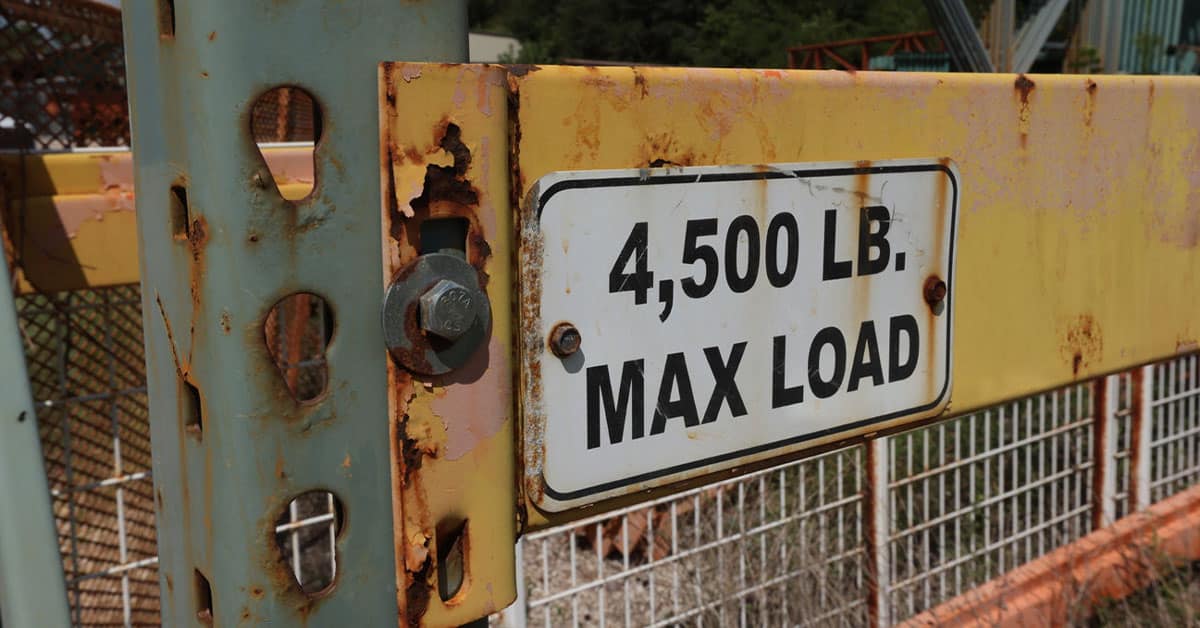
Post load capacities. Keep capacity signs up and make sure workers understand them. Check any change to beam heights, bracing or pallet sizes before making it.
Look at your layout. Tight aisles, blind corners and busy intersections lead to repeat hits. A layout review can cut damage and speed up picking. If you’re expanding or moving buildings, plan protection into the new layout from the start. Massey Rack handles rack installation and warehouse relocation and liquidation.
Protect the high-risk spots first. Exposed uprights, aisle ends, loading areas and turning zones get hit the most. Guarding those first gives you the most protection for the money.
OSHA and Rack Safety Standards
OSHA doesn’t have one rule written just for pallet racking, but employers still have to control storage hazards. Under 29 CFR 1910.176(b), stored materials must be stable and secure against sliding or collapse. OSHA’s warehouse guidance also covers inspections, protecting rack from forklift contact and avoiding overloading.
The Rack Manufacturers Institute (RMI) publishes ANSI MH16.1, the main U.S. standard for designing and using industrial steel storage racks. Local building and fire codes may add their own requirements, so check what applies to your building.
How Massey Rack Helps Houston Warehouses
Massey Rack is a Houston distributor and installer of new and used pallet racking, based at 2705 Frick Rd in north Houston. We help warehouse operators find practical fixes that balance safety, speed and cost:
- Pallet rack damage checks and repair
- Replacement uprights, beams and rack parts, new and used
- Column guards and end-of-aisle protection
- Rack safety accessories like wire decking and netting
- Preventive maintenance and inspection support
- Selective pallet racks and full system installation
We serve warehouses across Houston and the rest of Texas.
Frequently Asked Questions
Can a damaged pallet rack be repaired instead of replaced? Often, yes. Many racks can be fixed with an engineered repair or by swapping out the damaged upright or beam. The right fix depends on how bad the damage is, your rack style and whether matching parts are available.
Is it safe to use a pallet rack with a bent upright? No, not until it’s checked. A bent upright may have lost strength. Unload and block off the bay, then have a qualified rack professional inspect it.
How often should pallet racks be inspected? It depends on how busy your warehouse is and how often damage happens. Report every hit right away, and schedule regular documented inspections on top of that.
How do I protect rack uprights from forklifts? Use a mix of column guards, end-of-aisle protectors, barriers, good aisle layout and operator training. No single fix covers everything.
Can racks be repaired without unloading them? Some specialized repairs allow part of the rack to stay loaded, but only when approved for that specific rack and repair method. Never assume it’s safe.
Can I use used parts to replace damaged rack? Yes, as long as the parts are in good condition and compatible with your existing system. Matching the right style and size matters. Massey Rack can help you find matching used uprights and beams.
How much does pallet rack repair cost? It depends on the damage, the parts needed, labor and your rack design. A quick assessment tells you the cheapest safe fix.
Don’t Let a Small Dent Become a Big Problem
Rack damage affects your people, your product and your bottom line. Catch it early, have it checked and protect the spots that get hit most.
Need pallet rack repair, replacement parts or protection in Houston? Call Massey Rack at (281) 310-5405, get an estimate, or visit us at 2705 Frick Rd, Houston, TX 77038.
References: OSHA 29 CFR 1910.176(b); OSHA warehousing safety guidance; ANSI MH16.1 (Rack Manufacturers Institute). Repair and unloading steps must be evaluated for each site and rack system.